
NFL Over/Under Betting UK: Match Totals Odds
 Available in US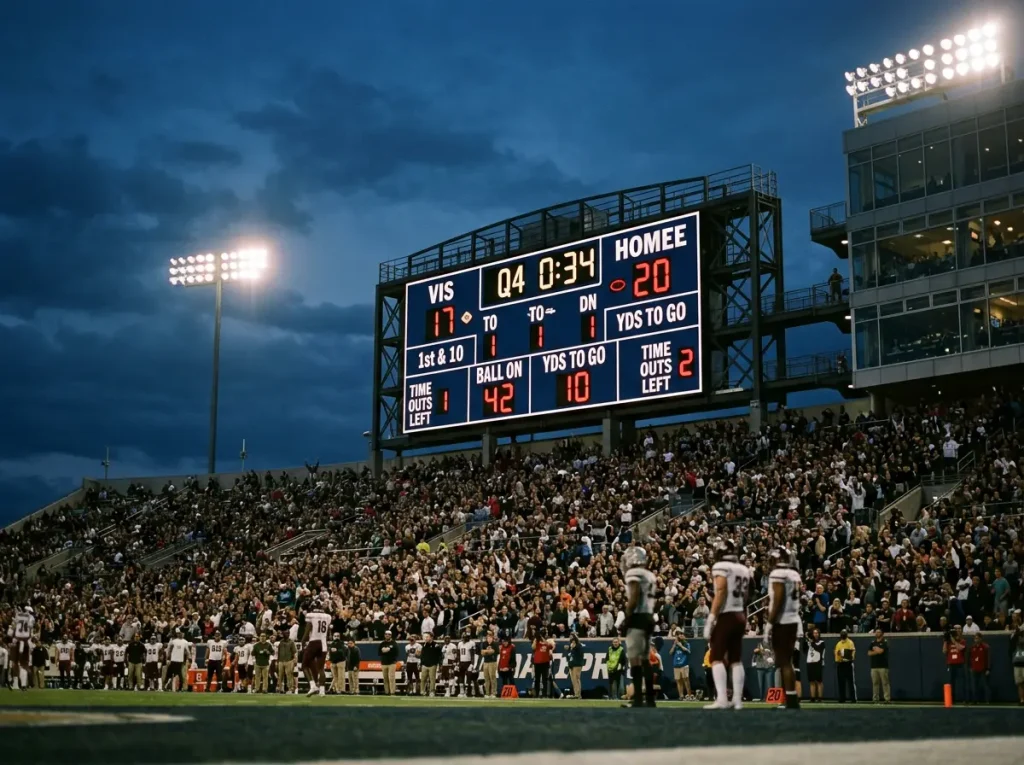
Some of my best NFL bets have nothing to do with who wins. A few seasons back, I watched two defensive powerhouses grind through a Sunday night game in December — freezing temperatures, heavy wind, neither offence moving the ball. The total was set at 41.5. The final score was 13-9. I’d taken the under before kick-off based on weather data alone, and that twenty-two-point combined score was one of the most comfortable winners I’ve ever had. Totals betting asks a different question from the moneyline or spread: not who wins, but how much scoring happens. And for UK punters who enjoy analysing the conditions around a game rather than just the teams, it opens up an entirely separate layer of the NFL.
Approximately 290 million online bets on real events are placed each month in the UK, according to Statista. A growing share of those NFL-related wagers targets the totals market, driven partly by the 60% year-on-year surge in NFL betting volume reported by Entain and partly by the market’s accessibility — you don’t need to pick a side to have a view on the score.
Points Projection: Setting the Match Over/Under Total
The bookmaker sets a number representing the expected combined score of both teams. Your job is to decide whether the actual combined score will finish above (over) or below (under) that line. If the line is 47.5, and the game ends 28-24 (combined 52), the over wins. If it ends 20-17 (combined 37), the under wins.
Odds on each side are typically priced near even money — 10/11 on the over and 10/11 on the under, or slight variations reflecting where the money has landed. The bookmaker’s margin sits in that gap between the two prices, just as it does on spread markets.
NFL totals usually fall between 36.5 and 54.5 for regular-season games. Playoff games can push the range slightly, and the Super Bowl total tends to sit near the season average. Half-point lines (the .5) exist to prevent pushes. When a total is set at a whole number like 44 and the combined score lands exactly there, the bet pushes and your stake is returned. Bookmakers increasingly avoid whole-number totals for this reason.
One detail UK punters sometimes miss: overtime counts. If a game goes to extra time and additional points are scored, those points count toward the total. A game that seems destined for the under at 20-17 heading into overtime can flip to the over if a touchdown is scored in the extra period.
Factors That Move NFL Totals Lines
Why does one game open at 51.5 while another opens at 39.5? The answer lives in a cluster of variables that bookmakers process and bettors can evaluate independently.
Offensive efficiency matters most. Teams averaging 28 points per game naturally push totals higher than teams averaging 17. But it’s not just raw scoring — pace of play affects opportunity. A team that runs 72 plays per game creates more scoring chances than one averaging 60. When two up-tempo offences meet, the total reflects both the scoring rate and the volume of possessions.
Defensive quality is the counterweight. Points allowed per game, yards allowed per play, and third-down conversion rate allowed all factor into where the line sits. A matchup between the league’s top-scoring offence and its worst defence will carry a higher total than a game between two middle-of-the-pack units.
Weather is the wild card, and it’s the one factor I lean on most when betting totals. Wind above 15 miles per hour suppresses passing offences, which typically reduces scoring. Rain affects ball security and footing, leading to more conservative play-calling. Cold temperatures — particularly below freezing — tighten receivers’ hands and slow the passing game. Snow is the most dramatic: heavy snowfall can turn a projected 48-point game into a 30-point affair. NFL betting volume among UK punters has surged partly because this kind of situational analysis rewards preparation over luck.
Game script expectations also play a role. When a heavy favourite is expected to build an early lead, the trailing team will pass more aggressively, which can increase total scoring through the second half. Conversely, when two evenly matched teams are expected to play conservatively, the total reflects that tighter dynamic.
Strategies for Betting NFL Totals
After nine years of tracking my totals bets, three patterns have held consistently. First, weather unders in outdoor stadiums outperform the market expectation. Bookmakers adjust totals for weather, but in my experience they don’t adjust enough. A game in Green Bay in December with wind chill below minus ten deserves a steeper discount than the two-point reduction most books apply.
Second, Thursday night unders carry value. Thursday Night Football features teams on short rest, which leads to sloppier execution, more conservative game plans and lower scoring on average. The data supports this — Thursday games have historically scored below their projected totals at a rate above 50%, which, in an even-money market, creates a thin but consistent edge.
Third, resist the temptation to chase overs. Overs feel exciting — you’re rooting for touchdowns, big plays, points on the board. But that excitement is priced in. Casual bettors disproportionately back the over, which means the bookmaker’s line already accounts for that public bias. The under is the less popular side and, over a full season, tends to offer marginally better value precisely because fewer people want to bet on a boring game.
For a broader framework on integrating totals analysis into a season-long plan, the NFL betting strategy guide covers bankroll allocation and line-shopping principles that apply directly to totals markets.
Team Totals vs Game Totals
Game totals ask about the combined score. Team totals isolate one side — will the Bills score over or under 27.5? The distinction matters because it lets you express a directional view on one team’s offence without needing the other team to cooperate.
Suppose you believe the Eagles’ offence will dominate a weak defence but you’re less sure about the opposing offence’s ability to contribute to the game total. Backing the Eagles’ team total over gives you exposure to your thesis without the uncertainty of the other team’s scoring. If the Eagles win 34-10, the game total (44) might fall short of a 46.5 line, but the Eagles’ team total at 26.5 clears comfortably.
Team totals generally carry slightly wider margins than game totals because they’re less liquid. But they compensate by offering precision that game totals can’t match. When your analysis is one-sided — you have a strong view on one offence but not the other — a team total is the cleaner expression of that view.
Not all UK bookmakers offer NFL team totals. The larger platforms include them as a standard market; smaller operators may list only the game total. If team totals are part of your approach, verify availability before building your weekly card.
Alternate totals are another layer worth knowing. Just as you can buy or sell points on a spread, many UK bookmakers let you bet on alternative game totals — a higher or lower line than the standard offering. Backing over 38.5 instead of the standard 44.5 gives you shorter odds but a significantly wider margin for the bet to land. Backing over 50.5 instead of 44.5 offers longer odds but requires a genuinely high-scoring affair. Alternate totals let you calibrate your risk-reward ratio with more precision than the standard line permits.
Articles
Prepared by the GRIDLOCK editorial staff.
