
NFL Teaser Bets UK: Buying Points and Spreads
 Available in US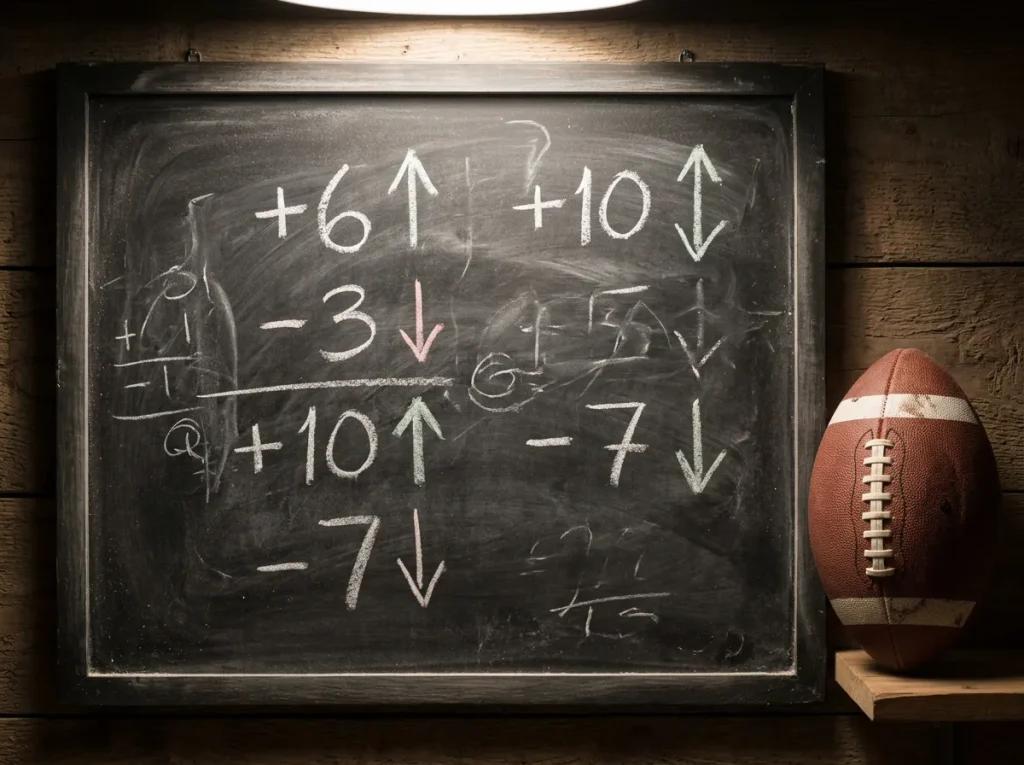
I stumbled onto teaser bets almost by accident. It was December 2020, a cold Sunday evening, and I had two NFL picks I felt strongly about — but neither spread felt comfortable at the standard line. A mate in a group chat mentioned he’d been teasering six points on two-team parlays all season and was comfortably in profit. I was sceptical, did the maths, placed my first teaser that night, and watched both legs cover with room to spare. That moment changed how I approach NFL betting weekends. Teasers aren’t glamorous, they don’t produce life-changing payouts, and they’re rarely discussed in UK betting circles — but they’re one of the most mathematically sound structures available when used correctly.
The concept is simple enough that it surprises me how few UK bettors use teasers regularly. You’re trading payout for probability: accepting reduced odds in exchange for moving the point spread or total in your favour by a fixed number of points across two or more selections. In NFL, where key numbers like three and seven dominate final margins, those extra points can transform a nervous sweat into a comfortable cover.
Teaser Mechanics: Connecting Multiple NFL Spreads
My first season tracking teasers properly, I kept a spreadsheet that logged every selection alongside the standard spread and the teased spread. By week twelve, the pattern was unmistakable: my teaser win rate was hovering around 72%, while my standard spread bets were hitting at barely 53%. The reduced odds meant the profit per bet was lower, but the consistency was transformative for my bankroll stability.
A teaser allows you to adjust the point spread or total on two or more selections by a fixed number of points. The most common teaser in NFL is a six-point, two-team teaser. If the original spread is Kansas City -7.5, a six-point teaser moves it to Kansas City -1.5. If the second leg is Buffalo +1.5, it becomes Buffalo +7.5. Both legs must win for the teaser to pay out — it functions like an accumulator in that sense — but the adjusted lines dramatically improve the probability of each leg covering.
Standard teaser options at most UK bookmakers offering the market include six-point, 6.5-point, and seven-point adjustments. Some operators also offer ten-point teasers on three or more legs. The payout decreases as you add more points: a six-point, two-team teaser typically pays around -110 in American odds, which translates to roughly 10/11 or 1.91 in decimal. A seven-point teaser on the same two legs might pay around -130 (10/13 or 1.77 decimal). The maths is straightforward — more cushion, less reward.
One important structural note: ties in teasers are handled differently depending on the bookmaker. At some operators, a tie on one leg reduces the teaser to a single bet. At others, a tie loses the entire teaser. This distinction matters when you’re selecting lines that might land exactly on key numbers. Always check the house rules before placing.
The Wong Teaser: Crossing Key Numbers
Years ago, I read Stanford Wong’s analysis of NFL teasers and it fundamentally reshaped my approach. Wong demonstrated that not all teasers are created equal — the value is concentrated in specific line ranges where the six-point adjustment crosses the most key numbers. I’ve applied this framework every season since, and it remains the single most useful piece of betting theory I’ve encountered for NFL.
In NFL, final margins cluster around three (a field goal) and seven (a converted touchdown). When you tease a favourite from -7.5 to -1.5, you’re crossing both three and seven — the two most common margins of victory. That six-point swing captures an outsized share of probable outcomes. Similarly, teasing an underdog from +1.5 to +7.5 crosses three and seven in the other direction.
Wong’s research identified two sweet spots for six-point teasers. Favourites lined between -7.5 and -8.5 teased down to -1.5 or -2.5. Underdogs lined between +1.5 and +2.5 teased up to +7.5 or +8.5. In both cases, the teased line crosses the maximum number of key numbers, creating the highest probability of covering. Selections outside these ranges — a team at -3 teased to +3, for instance — cross fewer key numbers and generate less value relative to the reduced payout.
The discipline here is restraint. Not every week produces two or three selections in the Wong zones. Some weeks, you’ll scan the full slate and find nothing worth teasering. That’s fine. The edge comes from selectivity, not volume. Forcing a teaser with suboptimal lines because you want action on a Sunday evening is the fastest way to erode the mathematical advantage.
Teasers Versus Accumulators
A friend once asked me why he should bother with a teaser that pays 10/11 when he could build a four-leg acca at 12/1. I asked him what his accumulator win rate was over the past two seasons. He went quiet. That silence tells you everything about the difference between theoretical payout and actual return.
Accumulators multiply odds, creating large potential payouts from small stakes. The appeal is obvious, and Entain’s data showing roughly 90% growth in anytime touchdown scorer bets illustrates how much UK bettors love the high-reward structure. But the probability of hitting a four-leg accumulator at standard odds is significantly lower than hitting a two-team teaser with adjusted lines. Over a season of weekly bets, the teaser bettor’s bankroll tends to grow steadily while the accumulator bettor’s fluctuates wildly.
The key distinction is variance. Accumulators are high-variance instruments — you’ll lose most of them and occasionally win big. Teasers are low-variance instruments — you’ll win most of them but for modest returns. Neither is inherently superior; they serve different objectives. If your goal is long-term, grindable profit from NFL betting, teasers with disciplined selection criteria have a structural edge. If you’re betting for entertainment and the thrill of a big payout, accumulators deliver that experience. For a comprehensive look at accumulator strategy, the NFL accumulator tips guide covers the essentials.
One hybrid approach I’ve used successfully: allocate 70% of your weekly NFL staking to teasers and standard spread bets, and 30% to higher-variance plays like accumulators and same-game parlays. The teasers provide the bedrock of returns, and the accumulators offer upside without threatening the core bankroll.
Finding and Placing Teasers at UK Bookmakers
I’ll confess this freely: the first time I tried to place a teaser at a UK bookmaker, I couldn’t find the option. It wasn’t on the main NFL page, it wasn’t in the bet builder, and I spent a solid ten minutes clicking through menus before discovering it was hidden behind an “alternatives” tab on the bet slip. The interface has improved since then at most operators, but teasers remain a less visible market than standard accumulators — partly because the lower payouts make them less profitable for the bookmaker to promote.
Not all UK bookmakers offer NFL teasers. The market is most consistently available at operators with strong American sports coverage. When evaluating which platform to use, check three things: the availability of six-point and seven-point teaser options, the payout structure (which can vary by several percentage points between operators), and the tie rules. A two-team six-point teaser paying -110 at one bookmaker and -120 at another represents a meaningful difference over a season of weekly plays.
Building a teaser is mechanically similar to building an accumulator. Add your selections to the bet slip, look for the teaser option (sometimes labelled “teaser” or “alternative lines”), select the number of points, confirm the adjusted lines and payout, and place the bet. Some operators allow you to teaser totals as well as spreads — backing the over on a game total and teasing it down by six points, or the under teased up by six. The same key-number logic applies, though the clustering around three and seven is less pronounced for totals than for margins of victory.
Common Mistakes and How to Avoid Them
The most frequent teaser mistake I see — and I made it myself for an entire season — is adding too many legs. A six-point, two-team teaser has a fundamentally different risk profile from a six-point, four-team teaser. Each additional leg compounds the probability of failure. Even if each individual leg has a 75% chance of covering the teased spread, a four-team teaser hits only about 32% of the time. At the payouts offered, that’s rarely profitable. Stick to two teams, occasionally three. Never four or more.
Another error is teasing lines that don’t cross key numbers. Teasing a -3 favourite to +3 looks attractive on paper — you’ve moved past zero, so you only need the team not to lose. But you haven’t crossed seven, and you’ve only captured the outcomes between -3 and +3. Compare that to teasing -7.5 to -1.5, which captures every outcome between -7 and -2 and crosses both three and seven. The second option is structurally superior despite both involving the same six-point adjustment.
Ignoring totals teasers is a subtler mistake. If a game total is set at 43.5, teasing the over down to 37.5 or the under up to 49.5 creates substantial cushions. These don’t follow the Wong zones as cleanly — total key numbers are less sharply defined — but in low-scoring divisional matchups or high-altitude games, totals teasers can complement spread-based plays effectively.
Finally, don’t use teasers to rescue bad analysis. If you think a team will win but don’t trust them to cover -7.5, a teaser to -1.5 improves the line — but if your underlying analysis is wrong about the winner, no amount of points will save you. Teasers enhance good selections; they don’t fix poor ones.
Articles
Written by the editors at GRIDLOCK.
