
NFL Home/Away Betting Trends: Venue Impact
 Available in US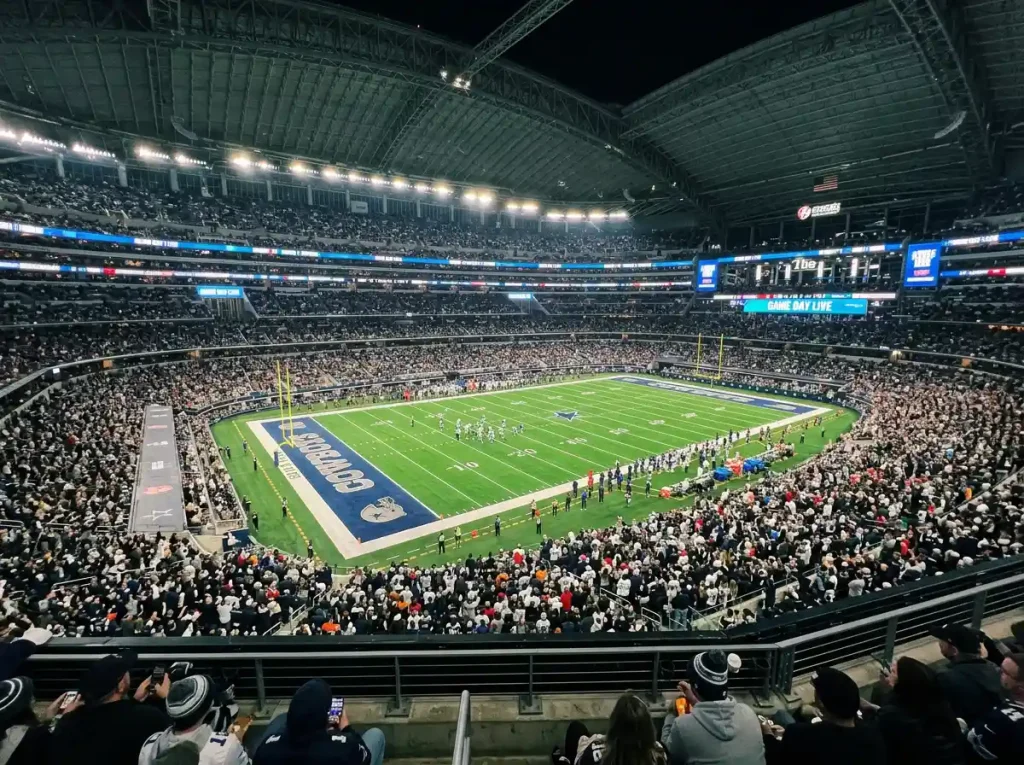
Week 14, 2024 season. The Jaguars were hosting the Titans in what should have been a straightforward home advantage spot — a divisional game, decent crowd expected, mild Jacksonville weather. I backed Jacksonville at -3, reasoning that home-field advantage in a mediocre divisional matchup would tip the balance. The Jaguars lost outright by ten. That result didn’t surprise the data — it surprised me, because I’d been applying a home-field advantage assumption that hadn’t been accurate for years. The NFL’s home-field edge has been shrinking for over a decade, and if you’re still pricing it the way you would have in 2010, you’re giving away value.
For UK bettors, the concept of home advantage is intuitive. In Premier League football, home teams win roughly 45% of matches, and the crowd effect is well understood. NFL home-field advantage operates differently — the factors that create it are more varied and more measurable, and the trend over the past decade has been a clear, documented decline. Understanding what home advantage actually means in modern NFL, and where it still holds genuine weight, is one of the more underappreciated edges available to sharp bettors.
Statistical Shifts: Decreasing Home-Field Advantages
I started tracking NFL home-team cover rates seriously in the 2018 season, and the numbers have been sobering for anyone who defaults to backing the home side. Through much of the 1990s and 2000s, NFL home teams won roughly 57-58% of games straight up. By the 2020s, that figure had declined to around 53-54%, and in some individual seasons it dipped below 53%. The trend is real, it’s persistent, and it has meaningful implications for how you set your expectations when analysing spreads.
Several structural changes explain the decline. The NFL’s equalisation mechanisms — the salary cap, the draft system, revenue sharing — have made the league more competitive than it was twenty years ago. Talent is distributed more evenly, which means the gap between home and away team quality on any given Sunday is narrower than it used to be. Travel has improved too: teams fly charter, stay in luxury hotels, and have sports science staff managing rest and nutrition. The physical toll of being the visiting team has been substantially reduced.
Rules changes have also played a role. The shift toward a passing-centric game has benefited offences at the expense of crowd-noise-driven defensive advantages. Modern offensive communication systems, including the green dot helmet allowing the quarterback to receive play calls until fifteen seconds remain on the play clock, have reduced the impact of crowd noise. The home crowd still matters — but the mechanisms through which it creates a competitive advantage have been partially neutralised.
For UK punters, the practical takeaway is straightforward: if you’re adding a blanket two-and-a-half to three-point home-field adjustment to your power ratings, you’re probably overestimating. The modern NFL home-field edge is closer to one-and-a-half to two points on average, with significant variation by team and situation. The market knows this — lines already reflect a reduced home-field premium — but recreational bettors often lag behind.
Where Home Advantage Still Holds
My most profitable home-field spots over the past three seasons have all shared common characteristics: high altitude, extreme weather potential, or genuinely hostile crowd environments. Not every NFL stadium is equal. Denver’s mile-high altitude affects visiting teams’ conditioning. Green Bay’s December temperatures test dome-team resolve. Seattle’s enclosed stadium design amplifies crowd noise to levels that measurably increase false-start penalties on visiting offences. These are the venues where home advantage isn’t just a narrative — it’s a quantifiable factor.
Altitude is the most scientifically defensible advantage. Denver sits at 1,600 metres above sea level, and visiting teams experience reduced aerobic capacity, particularly in the second half. The Broncos have historically outperformed at home relative to their road record by a wider margin than almost any other franchise — perhaps an extra point or two beyond the standard adjustment, persistent and difficult to mitigate in a one-game sample.
Weather-related home advantage intersects with the analysis covered in the weather betting guide, but the summary is this: teams accustomed to their home conditions — Buffalo in snow, Green Bay in extreme cold, Miami in heat and humidity early in the season — perform better in those conditions than visitors. The edge is most pronounced in late-season games when the weather diverges most dramatically from what a visiting team experiences at home.
Crowd noise remains a factor, but it’s venue-specific. Enclosed or partially enclosed stadiums — Seattle, New Orleans, Minneapolis — generate noise levels that open-air venues can’t match. False start penalties are measurably higher for visiting offences in these environments, and the effect increases in high-stakes games where crowd intensity peaks. If you’re evaluating a playoff game in Seattle, the home-field component deserves a larger adjustment than the league average would suggest.
Away Teams and the Road Warrior Myth
Early in the 2023 season, I noticed something that challenged my assumptions: several teams with losing home records were performing significantly better on the road. It felt counterintuitive, but the pattern has a logical explanation. Some teams, particularly those in rebuilding phases with a disillusioned fanbase, face more pressure at home than they do on the road, where expectations are lower and the crowd isn’t booing their own side. The “road warrior” phenomenon isn’t a myth — it’s a real pattern that emerges in specific contexts.
Travel dynamics for NFL teams visiting the UK illustrate this in an interesting way. London games — the NFL has hosted three annually since 2022, with 2025 seeing seven international fixtures including three in London — neutralise home-field advantage almost entirely. Neither team is truly at home, the crowd is largely neutral with a slight lean toward whichever franchise has marketed itself better to British fans, and both teams have dealt with the disruption of transatlantic travel. Entain reported a 65% year-on-year increase in UK NFL bettors, and many of those new punters first engage through London games where the home/away dynamic is essentially irrelevant.
West Coast teams travelling east for early kick-offs — 9:30am body-clock time for a 1pm ET start — have historically underperformed. The effect is well documented and remains reliable. It’s not strictly a home/away trend, but it intersects: the visiting team’s circadian disruption compounds the standard disadvantages of playing away. Conversely, East Coast teams travelling west for prime-time games gain an advantage, as the late kick-off aligns more closely with their internal clock.
Divisional road games are another context where standard assumptions need adjusting. Teams play divisional opponents twice per season, and familiarity reduces the home-field edge. Players know the opposing scheme, coaches have recent tape, and travel distances within divisions are manageable. Divisional games are typically closer regardless of venue, which is why divisional underdogs on the road have been a historically profitable spot.
Practical Home/Away Analysis for UK Punters
My approach to incorporating home/away factors has evolved considerably over the past five years. I used to apply a flat three-point adjustment for home field in my power ratings. Now I use a tiered system: 2.5 points for elite home environments (Denver, Seattle, Green Bay in winter, Kansas City), 1.5 points for average home venues, and just one point for teams with poor home attendance or those playing in neutral-site or London games. The adjustment isn’t static — it shifts based on the specific matchup, the time of season, and situational factors.
Schedule context matters enormously. A team playing its third consecutive road game faces a different situation than one playing a single road game between home stands. Short-week travel — Thursday night games where the visiting team flew in on Wednesday — compounds road disadvantage. Bye weeks reset the equation, as extra preparation time partially offsets venue-related disadvantage.
The 12.7 million active online gambling accounts in the UK each month represent a market where recreational bettors still overvalue home-field advantage in their NFL analysis. When a spread looks slightly generous toward the home team in a situation where the home-field edge is minimal — a dome team in mild weather, a team with poor home attendance, a divisional rematch — that’s often where the value sits on the away side. The market sets the line knowing the average home-field advantage; if you can identify spots where the actual advantage is below average, you have an edge.
Track your own results by venue. Over a season of eighteen weeks, patterns emerge. You’ll notice which stadiums consistently deliver home covers and which are essentially neutral sites. You’ll see the altitude effect in Denver, the noise effect in Seattle, the weather effect in Buffalo and Green Bay. And you’ll find that for the majority of NFL venues, in the majority of conditions, home-field advantage in the 2020s is a marginal factor — real, but too small to be the primary basis for a wager. It should inform your analysis, not drive it.
Fading the Public on Home Favourites
One of the most consistent edges I’ve found in NFL betting — and I’ve been tracking it for six seasons now — is fading heavily backed home favourites. When a home team attracts lopsided public action, the line often moves beyond the team’s true probability of covering. The public loves backing the home side, especially on nationally televised games where the crowd energy creates a psychological pull toward the home team. That emotional bias creates line value on the visitor.
The mechanism is simple. When 70% or more of public money falls on the home favourite, the line moves to attract money on the underdog. That movement creates a gap between the market price and the true probability. It doesn’t mean the road team wins — it means the road team covers more often than the inflated line implies. Over a large sample, backing road teams in these spots yields a positive return.
This pattern is particularly relevant for UK bettors who are still developing their NFL intuitions. The temptation to back the team playing at home, in front of a raucous crowd, on a Sunday night broadcast, is powerful. Resisting that temptation — and recognising that the market has already priced in the home advantage plus an additional public bias premium — is one of the simplest ways to improve your NFL betting results. The highly competitive UK bookmaker landscape means all major operators set their NFL lines based on the same wholesale market, so the opportunity to shop for value exists across platforms.
Selectivity remains essential. Not every road underdog in a public-heavy game is a value bet. The edge exists when home-field advantage for the specific venue is below average, when the road team has situational advantages, and when the line has moved meaningfully toward the home side due to public action. Stack those factors, and you have one of the more reliable angles in NFL betting.
Articles
Created by the "GRIDLOCK" editorial team.
